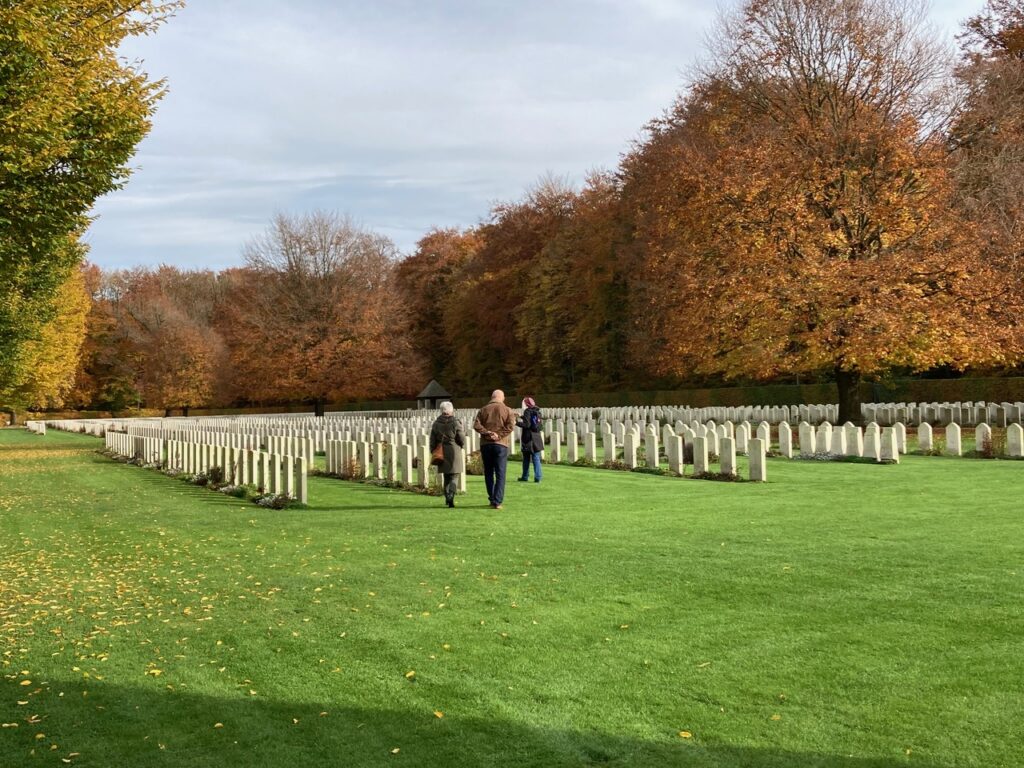
As the 80th anniversary of the end of the Second World War draws to a close, we might reflect on the sacrifice that Canadians made in those years. The Reichswald Forest Cemetery in Germany provides a stark reminder. There in the quiet serenity of a hardwood forest lie the remains of 7692 British Commonwealth servicemen killed in northwestern Germany. Over half of them were aircrew, and over 700 were Canadians killed in Bomber Command’s strategic air offensive against Germany’s war industry in the years 1941-44.
On entering this cemetery on a November morning I felt transfixed, overwhelmed by the sheer number of graves and the enormity of the loss and sacrifice they represent. The young men buried there had lived unexceptional lives and exhibited ordinary virtues and faults. Yet when the moment demanded it, they stepped forward and volunteered for aircrew. Over the years since much has been written about their courage and determination, and how they perished.
How their remains came to lie in this peaceful cemetery is a story rarely told, but no less worth remembering. Their aircraft had fallen out of the sky night after night for four long years, their bodies scattered across a vast stretch of enemy territory. Hastily (although for the most part honourably) buried by German soldiers, their exact whereabouts remained unknown to the Royal Air Force for all those years. The deaths of some were confirmed through the International Red Cross, but many could be classed only as “missing believed killed,” their aircraft listed as “lost without trace.” Not until war’s end could the RAF mount a search for their remains and account for their fate.
It did this through the Missing Research and Enquiries Service which, in cooperation with the Army Graves Service, searched every corner of enemy and occupied territory to find out where aircraft had crashed and where bodies had been buried. Over 30,000 airmen had gone missing in the air war. Even allowing for those who had been lost over the sea, the search units were confronted with an enormous task. They had first to find the bodies and identify them (which often required exhumation and forensic examination) and then rebury them with a more permanent if still temporary marker at site. They recorded their work in precise and often gruesome detail. These short-staffed and under-resourced search units combed Germany amidst an unfriendly population for four years to complete their work.
Those thousands of temporary graves could not be left scattered over the territory of our former enemy. The Commonwealth War Graves Commission therefore established several mass cemeteries in Germany, of which the Reichswald Forest Cemetery is the largest. They did so according to three key principles already established in the First World War. No serviceman’s body would be repatriated (whether to Britain or to Canada); the dead should lie in a common cemetery among their comrades near where they had fallen; and there would be no distinction between officers and men in the design and shape of their headstones. Next of kin were notified of this arrangement and asked to provide an epitaph. It took several more years to complete the plan.
It is only on account of this steadfast commitment to recover and identify the thousands of our missing airmen and provide for their proper burial, that we have the opportunity today to honour our individual war dead in sanctuaries like the Reichswald Forest Cemetery. For that, and for all who made it possible, we should be deeply grateful.
